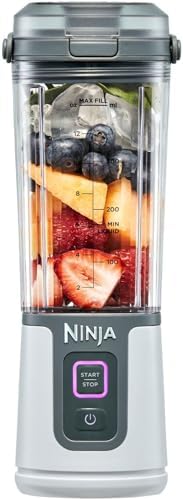

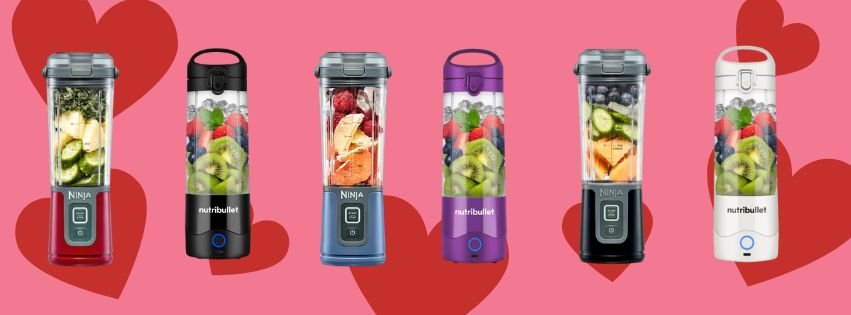
Portable blenders have become the grab-and-go kitchen gadget for busy mornings, gym trips and travel. I think they will be the Christmas present of the year in 2025! Why? They’re small, rechargeable, and built for single-serve smoothies, protein shakes and simple dressings, for people who are always on the go… and these days, who isn’t always on the go?
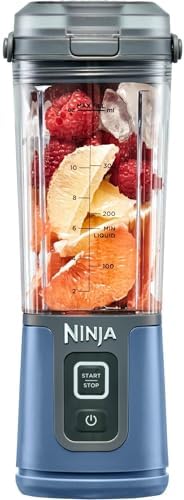
In this guide, we’ll break down the benefits of a portable blender, what to look for when shopping for one, and a side-by-side comparison of the two most popular models: the NutriBullet Portable Blender and the Ninja Blast Portable Blender.
*As an Amazon Associate I earn from qualifying purchases*
Why get a portable blender? (The benefits)
- True mobility — blend anywhere: gym, office, campsite, car (parked), or between errands. No need for a bench or mains socket.
- Fast single-serve convenience — reduced prep, fewer dishes, single-serve cups or bottles that double as travel mugs.
- Encourages healthier habits — when blending is easy, you’re more likely to make whole-food smoothies instead of skipping breakfast.
- Lightweight & compact storage — small footprint for tiny kitchens, lockers or backpacks.
- USB-C rechargeable — modern models charge from power banks, laptops or phone chargers. (Both NutriBullet and Ninja portable models use USB-C.)
What to look for when buying a portable blender
- Battery life / cycles per charge — how many 30–60 second blends you can expect on a full charge. If you’ll be away from power for a full day, aim for higher cycle counts (15+ is good)
- Blend time per cycle — some units are designed for 20–30 second bursts; others need repeated cycles for fibrous greens or ice.
- Blade design & materials — stainless steel multi-blade or proprietary “blast” blades affect how well frozen fruit, ice and nut butters blend.
- Capacity — typical portable jars are 12–22 oz (350–650 ml). Choose based on whether you want a full meal replacement or a quick protein shake.
- Weight & shape — if it’s for travel or gym use, lighter and narrow designs fit better in backpacks.
- Durability & splash/leak protection — look for leakproof sip lids, secure blade locks, and dishwasher-safe parts (if that’s important).
- Ease of cleaning — can the jar and lid go in the dishwasher, or do they need hand-washing? I always opt for dishwasher options.
- Charge method & charge time — USB-C is best; check how long a full charge takes.
- Warranty & safety features — safety interlocks, overheat protection and a decent warranty give peace of mind.
- Price & replacement parts/accessories — extra cups, lids, or replacement blades can be useful.
Quick buying tips
- For smoothies with lots of frozen fruit or ice: prioritise blade quality and models reviewed to handle frozen ingredients.
- For travel/gym use: pick a model with 15–20+ blends per charge and a secure sip lid.
- For frequent green smoothies: be prepared to run extra cycles or pre-soak fibrous greens.
| Feature | Ninja Blast Portable Blender | NutriBullet Portable Blender |
| Capacity | About 470mL/16oz | About 350-400mL |
| Battery/cycles per charge | 15-20 blends per charge | 15-20 blends per cycle |
| Blend power/performace | Ninja BlastBlade assembly, for frozen fruit, ice and thicker shakes. | For smaller ingredient pieces, shakes and smoothies. Not recommended for heavy duty blending. |
| Weight | About 0.63kg | About 0.88kg |
| Charge Time | 1.5-3 hours for a full charge | 1.5-3 hours for a full charge |
| Special Features | One handed sip lid with carry handle, Dishwasher safe components and multiple blend modes | Handled flip lid with sip spout, safety lock and dishwasher safe/ |
| Best for: | People who want more options and stronger blending for frozen food. | People who want more convenience and lots of short blends per charge for everyday shakes and light smoothies. |
Bestseller #1
Bestseller #2